

Hand signing a contract with a fountain pen

Legal compliance

The law we hold ourselves to

We buy, process and export natural resources from places where the rule of law is thin. That is exactly why we bind ourselves to the strictest law that reaches us, wherever we work. This page sets out what we prohibit, what we screen, what we record and how anyone can hold us to it.

Our four commitments

No bribes, anywhere

No payment, gift or favour to any official, soldier, chief or buyer to win a licence or sale.

No forced or child labour

No forced, bonded, trafficked or child labour at any site or supplier. Workers keep papers and leave freely.

Every hand-over recorded

Every value chain traced from point of provenance to final customer, with a custody record at each hand-over.

Every counterparty screened

Suppliers, buyers, banks and beneficial owners checked against UN, US, UK and EU lists before we deal.

Two people signing agreements at a dark table

No bribes · No facilitation payments · Recorded payments

No bribes · No facilitation payments · Recorded payments

Anti-Bribery and Corruption

We prohibit bribery in every form, everywhere we work. No employee, agent or partner may offer, pay or accept anything of value to win a licence, a passage, a permit or a sale. Facilitation payments are bribes. Every payment we make is recorded to a named recipient and a stated purpose.

Our business runs through mine sites, checkpoints, customs posts and ministries in places where a small payment is often expected. We do not make it. The rule covers cash, gifts, hospitality, jobs for relatives, charitable donations and any other advantage. It applies whoever asks: a public official, a soldier, a police officer, a traditional authority or a private buyer. A refused payment that delays a truck is a cost we accept.

We hold ourselves to the United States Foreign Corrupt Practices Act, the UK Bribery Act 2010 and the Congolese, Tanzanian and Angolan criminal codes. We keep the adequate procedures the Bribery Act expects: risk assessment, due diligence on agents and intermediaries, written approval of gifts and hospitality, training and monitoring. Agents, brokers and security contractors sign our anti-bribery terms before they act for us, and we can audit them and end the relationship.

Books and records matter as much as the rule. Every royalty, tax, fee and levy is paid through official channels against an official receipt, and every payment is booked to a named recipient and purpose. We disclose payments to public bodies where a host-state transparency regime asks for them. We cooperate with the Agence de Prévention et de Lutte contre la Corruption and any other competent authority.

Our commitments

  • We prohibit bribes, kickbacks and facilitation payments to anyone, public or private, anywhere.
  • Gifts and hospitality need written approval and are logged; nothing is offered to influence a decision.
  • Agents, brokers and intermediaries are vetted before appointment and bound by our anti-bribery terms.
  • Every royalty, tax and fee is paid through official channels against a receipt.
  • Payments to public bodies are recorded and disclosed where host-state transparency rules require.
  • We prohibit anyone acting for us from facilitating tax evasion or fraud.
Laws and standards we work to

United States
Foreign Corrupt Practices Act
15 U.S.C. §§ 78dd-1 et seq.; accounting provisions at 15 U.S.C. § 78m(b)
No offer or payment of anything of value to a foreign official to obtain or retain business; accurate books and adequate internal controls.
United Kingdom
Bribery Act 2010
2010 c. 23, ss. 1, 2, 6 and 7
Bribery, including of foreign officials, is an offence; a company is liable for bribery by an associated person unless it had adequate procedures.
United Kingdom
Criminal Finances Act 2017, Part 3
2017 c. 22, ss. 45 and 46
A company must have reasonable procedures to prevent an associated person facilitating UK or foreign tax evasion.
United Kingdom
Economic Crime and Corporate Transparency Act 2023, failure to prevent fraud
2023 c. 56, ss. 199 to 206 and Sch. 13
A large organisation is liable for fraud committed for its benefit by an associated person unless it had reasonable fraud prevention procedures.
DR Congo
Code pénal, corruption and trading in influence
Décret du 30 janvier 1940 portant Code pénal congolais, Livre II, arts. 147 à 150, tel que modifié et complété par la Loi n° 05/006 du 29 mars 2005
Corruption, trading in influence and embezzlement by or of public officials are crimes.
DR Congo
Agence de Prévention et de Lutte contre la Corruption (APLC)
Ordonnance n° 20/013 bis du 17 mars 2020
A national agency coordinates the prevention and investigation of corruption; operators cooperate with its enquiries.
DR Congo
Extractive Industries Transparency Initiative (ITIE-RDC)
DRC EITI candidate since 2008, first found compliant in 2014
The DRC is an EITI-implementing country; extractive companies report payments to government and beneficial ownership through the national ITIE-RDC process, and we make those disclosures when asked.
International
OECD Due Diligence Guidance, Annex II
OECD Due Diligence Guidance for Responsible Supply Chains of Minerals from Conflict-Affected and High-Risk Areas, 3rd ed. (2016), Annex II
No bribery, no fraudulent misrepresentation of mineral origin, and payment of all taxes, fees and royalties due to government.
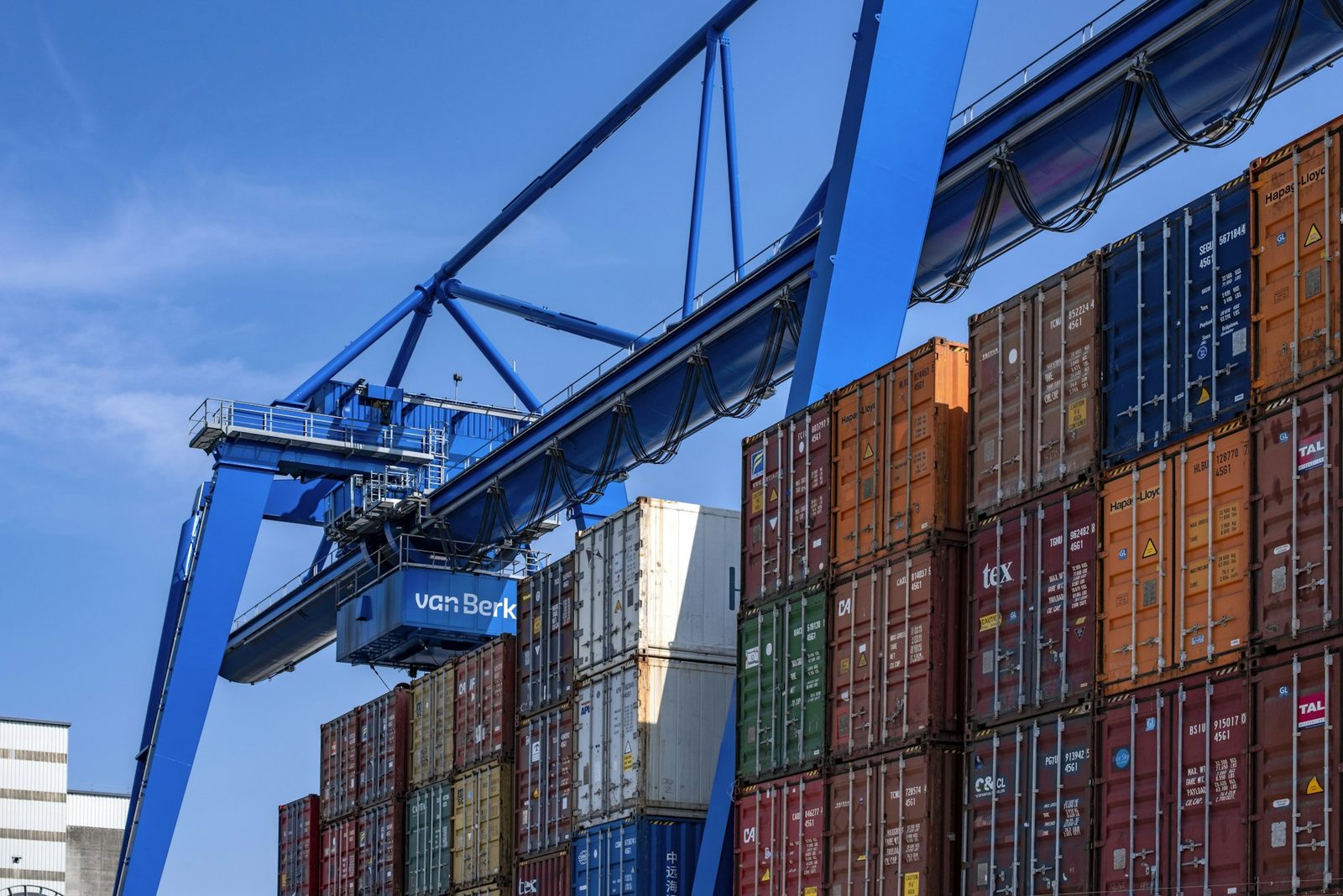
Container terminal crane over stacked shipping containers

Screening · Embargoes · Licences

Screening · Embargoes · Licences

Sanctions and Export Controls

We screen every supplier, cooperative, trader, transporter, bank, vessel and customer, and their beneficial owners, against the UN, US, UK and EU sanctions lists. We do it before we contract and again before every shipment. We do not deal with designated persons, we do not ship to embargoed destinations, and we do not move controlled goods without a licence.

The UN, US, UK and EU sanctions regimes on the DRC designate people who fund armed groups through the illicit trade in minerals. Those are precisely the people a purchase gate must keep out. We screen names, companies, beneficial owners, banks, vessels and end-users against the OFAC Specially Designated Nationals list, the UK Sanctions List, the EU consolidated list and the UN 1533 list. We apply the 50 percent ownership rule, and we refuse or freeze on a match.

Export controls cover what we move as well as whom we pay. Crushers, assay instruments, communications, surveillance and security equipment are classified against the US Commerce Control List and the UK Strategic Export Control Lists before shipment. Consignees are screened against the Entity List and the other denied-party lists. We do not export or broker defence articles or defence services, including the training of foreign forces, without a State Department licence under the ITAR.

A named sanctions officer approves any transaction that could touch a designated person and seeks an OFAC or OFSI licence where one is available. Records are kept for at least six years. We refuse and report any request to join an unsanctioned foreign boycott. Where a match is confirmed we stop, we report to the competent authority, and we do not resume until the matter is cleared.

Our commitments

  • We screen every counterparty and beneficial owner against UN, US, UK and EU lists before contracting.
  • We rescreen at every shipment and on every list update.
  • We apply the OFAC 50 percent rule and the UK ownership-and-control test to group companies.
  • We classify equipment against the Commerce Control List and UK Strategic Export Control Lists.
  • We do not export defence articles or train foreign forces without an ITAR licence.
  • We keep sanctions and export records for six years and report confirmed matches.

Laws and standards we work to

United States
DRC-related sanctions programme under IEEPA
Executive Order 13413 as amended by Executive Order 13671; 31 C.F.R. part 547; 50 U.S.C. §§ 1701–1706
US persons may not deal with persons designated for threatening peace in the DRC, including through the illicit trade in natural resources.
United States
Global Magnitsky Human Rights Accountability Act
22 U.S.C. §§ 10101–10103; Executive Order 13818; 31 C.F.R. part 583
No dealings with persons designated for serious human rights abuse or significant corruption anywhere in the world.
United States
Arms Export Control Act and International Traffic in Arms Regulations
22 U.S.C. § 2751 et seq.; 22 C.F.R. parts 120–130
Export of defence articles, defence services and technical data on the US Munitions List needs State Department registration and a licence.
United States
Export Control Reform Act and Export Administration Regulations
50 U.S.C. §§ 4801–4852; 15 C.F.R. parts 730–774
Dual-use goods, software and technology need Commerce Department authorisation when destination, end-user or end-use is controlled; denied-party lists must be screened.
United States
Anti-Boycott Act of 2018
50 U.S.C. §§ 4841–4843; 15 C.F.R. part 760
US persons may not comply with, or furnish information in support of, an unsanctioned foreign boycott, and must report boycott requests.
United Kingdom
Sanctions and Anti-Money Laundering Act 2018 and the DRC (Sanctions) (EU Exit) Regulations 2019
2018 c. 13; SI 2019/433
Asset freezes on designated persons, including those funding armed groups through illicit resource trade, and an arms embargo on non-governmental forces in the DRC.
United Kingdom
Export Control Order 2008 and the UK Strategic Export Control Lists
SI 2008/3231, made under the Export Control Act 2002 (c. 28)
Military and dual-use goods, software, technology, brokering and technical assistance need an Export Control Joint Unit licence.
EU
EU restrictive measures concerning the DRC
Council Decision 2010/788/CFSP; Council Regulation (EC) No 1183/2005, as amended
Asset freezes and travel bans on persons sustaining armed groups through illicit resource trade, plus an arms embargo.
International
UN Security Council DRC sanctions regime
UN Security Council resolution 1533 (2004) and successor resolutions
Asset freeze and travel ban on listed persons, including those who fund armed groups through the illicit trade in natural resources.
Two African site security officers in blue uniforms at a construction site

Dignity · Restraint · Vetting

Dignity · Restraint · Vetting

Human Rights and Security

We respect the human rights of everyone our work touches: miners, farmers, employees, contractors, neighbours and the people who guard our sites. Security exists to protect people and material, never to coerce them. We vet every security partner and every host-state unit we work alongside, we train guards in restraint, and we suspend cooperation where credible evidence of abuse exists.

Our sites sit in places where security forces, public and private, have a history of abuse. We work to the UN Guiding Principles on Business and Human Rights and the Voluntary Principles on Security and Human Rights. Before a gate opens we assess the human rights risks of the site, the armed actors around it and the units we may have to deal with. The result is written into the site security plan.

Private security contractors sign use-of-force rules that permit force only when necessary and proportionate, and never to enforce a sale or a price. Every guard is age-verified and background-checked. Where we work alongside state security units we vet them to the standard of the US Leahy Laws. We do not employ, equip or train any unit that recruits or uses children, and we give public forces no more than the law allows.

Abuses are reported, recorded and remedied. Any credible allegation against a guard, a contractor or a public unit stops our cooperation with that person or unit while it is investigated. It is also reported to the competent authorities. Miners, workers and neighbours can raise a concern at any site office or by email, and we protect them from retaliation for doing so.

Our commitments

  • We align our human rights due diligence to the UN Guiding Principles on Business and Human Rights.
  • We contract private security only on Voluntary Principles terms with written use-of-force rules.
  • We vet host-state security units to the Leahy standard before working alongside them.
  • We do not engage any unit or contractor that recruits or uses children.
  • We suspend cooperation and report on any credible allegation of a gross violation.
  • Communities and workers have a grievance channel and protection from retaliation.

Laws and standards we work to

International
UN Guiding Principles on Business and Human Rights
Endorsed by Human Rights Council resolution 17/4 (2011)
Companies respect human rights, run human rights due diligence and provide or cooperate in remedy where they cause or contribute to harm.
International
Voluntary Principles on Security and Human Rights
Voluntary Principles on Security and Human Rights (2000)
Risk assessment and conduct rules for public and private security at extractive sites, including proportionate use of force and reporting of abuses.
United States
Leahy Laws
22 U.S.C. § 2378d (State Department); 10 U.S.C. § 362 (Defense Department)
No US assistance to a foreign security force unit where there is credible information it committed a gross violation of human rights.
United States
Child Soldiers Prevention Act of 2008
22 U.S.C. §§ 2370c–2370c-2
Restricts US security assistance to governments whose forces or supported groups recruit or use child soldiers; the DRC has appeared on the list published in the annual Trafficking in Persons Report, most recently in 2025.
International
OECD Due Diligence Guidance, Annex II
OECD Due Diligence Guidance for Responsible Supply Chains of Minerals from Conflict-Affected and High-Risk Areas, 3rd ed. (2016), Annex II
No tolerance of serious human rights abuses, and no direct or indirect support to non-state armed groups or to abusive public or private security forces.
Plant worker in blue uniform and cap, arms folded, looking at the camera

No coercion · No fees · Free to leave

No coercion · No fees · Free to leave

Forced Labour and Trafficking

GMPG neither uses nor tolerates slave labour, forced or compulsory labour, indentured or bonded labour, debt bondage, prison labour or human trafficking anywhere in its operations or supply chain. Workers keep their identity documents, are never charged recruitment fees, and may leave employment freely. This is the standard we apply and enforce at every site, gate and supplier.

The rule is absolute and it is the first thing we check. No one works for us, or for a contractor on our sites, under threat, debt, confiscated papers or a fee they had to pay to be hired. Nobody is locked in, and nobody is held to a contract they cannot end. The tin, tantalum, tungsten, gold, gemstones, oilseed, coffee, cacao, vanilla and timber we buy come from producers who are paid a published price and are free to sell elsewhere.

The goods we trade appear on the United States Department of Labor's List of Goods Produced by Child Labor or Forced Labor. We therefore treat every lot as high-risk until our own records show otherwise. None of the goods we ship is mined, produced or manufactured wholly or in part with convict, forced or indentured labour, including forced or indentured child labour. That is the standard of Section 307 of the Tariff Act of 1930, and we keep custody records so a Withhold Release Order can be answered with evidence.

We screen equipment, reagent and downstream-processing suppliers against the UFLPA Entity List published by the Forced Labor Enforcement Task Force. Where we supply the United States government we make the certifications and keep the compliance plan the Federal Acquisition Regulation requires. We publish an annual slavery and human trafficking statement in the form section 54 of the Modern Slavery Act 2015 asks for, whether or not we cross its threshold. We terminate any supplier found using forced labour.

Our commitments

  • We prohibit forced, bonded, indentured, prison and trafficked labour at every site, gate and supplier.
  • No worker pays a recruitment fee; we bear the cost of hiring.
  • Workers keep their passports, identity cards and miner cards at all times.
  • Every worker may leave with the notice the law provides, without penalty.
  • We screen suppliers against the UFLPA Entity List and CBP Withhold Release Orders.
  • We publish an annual slavery and human trafficking statement in the section 54 form.

Laws and standards we work to

United States
Trafficking Victims Protection Act of 2000 and reauthorisations
22 U.S.C. § 7101 et seq.; 18 U.S.C. §§ 1589, 1595 and 1596
Obtaining labour by force, threat, abuse of legal process or debt is a federal crime anywhere in the world; a company that knowingly benefits can be sued in US courts.
United States
Section 307 of the Tariff Act of 1930 and CBP Withhold Release Orders
19 U.S.C. § 1307; 19 C.F.R. §§ 12.42–12.45
Goods mined, produced or manufactured wholly or in part with convict, forced or indentured labour, including forced or indentured child labour, may not enter the United States.
United States
Uyghur Forced Labor Prevention Act and the Forced Labor Enforcement Task Force
Pub. L. 117-78, 22 U.S.C. § 6901 note; Forced Labor Enforcement Task Force established by 19 U.S.C. § 4681
Goods from Xinjiang or from UFLPA Entity List companies are presumed made with forced labour unless the importer proves otherwise.
United States
Executive Order 13126, Prohibition of Acquisition of Products Produced by Forced or Indentured Child Labor
Executive Order 13126 of 12 June 1999; FAR Subpart 22.15; FAR 52.222-18 and 52.222-19
A federal contractor supplying a product on the Department of Labor's E.O. 13126 List must certify a good-faith effort to establish that forced or indentured child labour was not used.
United States
FAR 52.222-50, Combating Trafficking in Persons
48 C.F.R. § 52.222-50; 22 U.S.C. § 7104; Executive Order 13627
Government contractors and subcontractors may not engage in trafficking, forced labour, fraudulent recruitment, recruitment fees or document confiscation, and must keep a compliance plan for larger overseas contracts.
United Kingdom
Modern Slavery Act 2015, section 54
2015 c. 30, s. 54; SI 2015/1833
A commercial organisation that carries on business in the UK with total annual turnover of £36 million or more publishes an annual, board-approved slavery and human trafficking statement covering structure, policies, due diligence, risk, effectiveness and training.
International
ILO Forced Labour Convention, 1930 (No. 29), its 2014 Protocol, and Abolition of Forced Labour Convention, 1957 (No. 105)
ILO C029, P029 and C105
Suppression of all forced or compulsory labour, with prevention, protection and remedy for victims.
DR Congo
Code du travail
Loi n° 015/2002 du 16 octobre 2002, modifiée et complétée par la Loi n° 16/010 du 15 juillet 2016
Forced or compulsory labour is prohibited; every worker has a contract and may end it under the law.
Tanzania
Employment and Labour Relations Act, 2004
Act No. 6 of 2004
Gives effect to the ILO core conventions, including the prohibition of forced labour.
Children writing in exercise books in a classroom

Under 18 · No mine · School instead

Under 18 · No mine · School instead

Child Labour

We do not employ children and we do not buy from any mine, farm or plant where a child works. No one under 18 works underground, in a plant, with chemicals or in any other hazardous work, on our sites or at our suppliers. When we find a child at work, we remove the work, not the family's income.

Congolese law treats anyone under 18 as a child and names work in mines among the worst forms of child labour. So do the ILO conventions we apply and the child protection laws of Tanzania and Angola. Our minimum age for employment is 18 everywhere we operate, whatever a local rule may allow. Nobody under 18 does hazardous work anywhere in our operations.

At the purchase gate age is verified against a miner card, cooperative register or identity document before a delivery is weighed. A delivery from a person who cannot show age is refused. A site where minors are found working is suspended from purchasing until the cooperative and the state mining service confirm the problem is resolved. Our field teams and the SAEMAPE agents at each gate record what they see.

Removing a child from work without replacing the household's income sends the child to a worse site. Where we find child labour we work with the cooperative, the family and local authorities on a remediation plan. That means school enrolment and, where possible, adult work for a household member at a published price. We fund school places rather than looking away, and we report on these cases.

Our commitments

  • No one under 18 works for us, on our sites or in hazardous work at any supplier.
  • Age is verified before any delivery is weighed or any contract is signed.
  • A site where a child is found working is suspended from purchasing until remediated.
  • Remediation puts the child in school and keeps income in the household.
  • We treat every lot as high-risk because our goods appear on the US Department of Labor list.
  • Field teams and SAEMAPE agents record what they see at every gate.

Laws and standards we work to

International
ILO Minimum Age Convention, 1973 (No. 138)
ILO C138
A minimum age for employment not below the end of compulsory schooling, and 18 for work likely to jeopardise health, safety or morals.
International
ILO Worst Forms of Child Labour Convention, 1999 (No. 182)
ILO C182
Immediate action to eliminate the worst forms of child labour, including hazardous work, for everyone under 18.
DR Congo
Loi portant protection de l'enfant
Loi n° 09/001 du 10 janvier 2009
Anyone under 18 is a child; the worst forms of child labour, expressly including work in mines, are prohibited.
DR Congo
Code du travail, minimum age provisions
Loi n° 015/2002 du 16 octobre 2002, modifiée et complétée par la Loi n° 16/010 du 15 juillet 2016
Sets the minimum age for employment and prohibits hazardous work by children.
United States
Department of Labor List of Goods Produced by Child Labor or Forced Labor
Trafficking Victims Protection Reauthorization Act of 2005, section 105(b)(2)(C), 22 U.S.C. § 7112(b)(2)(C); current edition published 5 September 2024
The Department of Labor's biennial list names cobalt ore, copper ore, diamonds, gold, tantalum ore, tin ore and tungsten ore from the DRC as goods produced with child or forced labour; it creates no legal duty, but we treat listed goods as high-risk.
United States
Executive Order 13126 List of products produced by forced or indentured child labour
Executive Order 13126 of 12 June 1999; FAR Subpart 22.15
Federal contractors supplying a listed product certify a good-faith effort to ensure no forced or indentured child labour was used.
Tanzania
Law of the Child Act, 2009
Act No. 21 of 2009 (Cap. 13)
No child may be engaged in exploitative labour; hazardous work, including mining and quarrying, is prohibited under 18.
Angola
Lei Geral do Trabalho
Lei n.º 12/23, de 27 de Dezembro
Sets the minimum working age and restricts the work minors may perform.
Smiling worker on a clean factory floor

Fair pay · Safe work · Free to organise

Fair pay · Safe work · Free to organise

Labour Standards

Everyone who works for us has a written contract in a language they read and is paid at least the legal minimum, on time and in full. They work lawful hours with rest, and may join a union and bargain collectively. Every site is engineered to be safe, and no one is punished for refusing unsafe work.

We employ people in the Democratic Republic of the Congo, Tanzania, Angola and the United States, work alongside partners in the United Kingdom, and apply the labour law of each place in full. That means the Congolese Code du travail, Tanzania's Employment and Labour Relations Act and Occupational Health and Safety Act, and Angola's Lei Geral do Trabalho. It also means US federal wage, hour, safety and labour-relations law, and UK employment, minimum wage and health-and-safety law. Where local law is silent we apply the ten ILO fundamental conventions.

Wages are paid in full, on time, by traceable means, with a pay slip that shows every deduction. Hours and overtime follow the law, with weekly rest and paid leave. We do not discriminate in hiring, pay or promotion on grounds of sex, ethnicity, religion, disability, origin or political opinion, and we pay equal wages for work of equal value. Workers may organise, elect representatives and bargain without interference or reprisal.

Mine sites, plants and refineries are dangerous places, so safety is engineered in. That means guarded machinery, dust and fume control, hearing and eye protection, written procedures for acids and other reagents, emergency plans and first aid. Every worker is trained before starting, may stop work they believe unsafe, and reports incidents without penalty. Contractors on our sites work under the same rules.

Our commitments

  • Written contracts in French, Swahili, Portuguese or English, as the worker reads.
  • At least the legal minimum wage, paid in full, on time, with an itemised pay slip.
  • Lawful hours, overtime pay, weekly rest and paid leave in every country.
  • Freedom of association and collective bargaining without interference or reprisal.
  • No discrimination; equal pay for work of equal value.
  • Safety training before work starts and the right to refuse unsafe work.

Laws and standards we work to

International
ILO fundamental conventions
ILO C087, C098, C100, C111, C155 and C187
Freedom of association and collective bargaining, equal pay and non-discrimination, and a safe and healthy working environment.
DR Congo
Code du travail
Loi n° 015/2002 du 16 octobre 2002, modifiée et complétée par la Loi n° 16/010 du 15 juillet 2016
Contracts, hours, wages, occupational safety, non-discrimination and freedom of association for every worker in the DRC.
Tanzania
Employment and Labour Relations Act, 2004
Act No. 6 of 2004
Employment standards, freedom of association, collective bargaining and the prohibition of child and forced labour.
Tanzania
Occupational Health and Safety Act, 2003
Act No. 5 of 2003 (Cap. 297)
Employers secure the safety, health and welfare of persons at work in every workplace.
Angola
Lei Geral do Trabalho
Lei n.º 12/23, de 27 de Dezembro
Contracts, working time, pay, safety and the collective rights of workers in Angola.
United States
Fair Labor Standards Act
29 U.S.C. § 201 et seq.
Federal minimum wage, overtime pay, record-keeping and child labour standards.
United States
Occupational Safety and Health Act of 1970
29 U.S.C. § 651 et seq.
Employers provide a workplace free from recognised hazards and comply with safety and health standards.
United States
National Labor Relations Act
29 U.S.C. § 151 et seq.
Employees may organise, bargain collectively and act together without employer interference.
United Kingdom
Employment Rights Act 1996; National Minimum Wage Act 1998; Health and Safety at Work etc. Act 1974
1996 c. 18; 1998 c. 39; 1974 c. 37
Written particulars, protection from unfair dismissal, the national minimum wage, and the employer's duty to ensure health and safety at work.
Two African workers shoveling crushed stone under a bright blue sky

Origin · Due diligence · Disengagement

Origin · Due diligence · Disengagement

Responsible Minerals Sourcing

We buy tin, tantalum, tungsten and gold only from known mine sites inside lawful artisanal zones, through approved cooperatives and card-holding miners, with OECD five-step due diligence on every lot. We do not buy material that funds armed groups or abusive security forces, is misrepresented in origin or has not paid its taxes. On a red flag, we stop.

The eastern DRC is a conflict-affected and high-risk area by any definition. We align our management systems, risk identification, risk response, audit and public reporting to the five steps of the OECD Due Diligence Guidance, with its 3T and Gold Supplements. Congolese law itself requires this of every operator, trader and exporter. The Annex II risks are restated in our sourcing policy and in every supplier contract.

We source only from sites validated green under the DRC and ICGLR mine-site validation process, and we suspend purchases from any site that turns yellow or red. Our exports carry the certificates the Regional Certification Mechanism and the Centre d'Expertise, d'Évaluation et de Certification issue. Every gold and gemstone export is submitted to CEEC. Rough diamonds move only under a Kimberley Process certificate, and we do not trade them outside the scheme.

Our in-house gold refining is aligned to the LBMA Responsible Gold Guidance and our processing plants to the Responsible Minerals Initiative's assurance standards. We will seek independent assessment as volumes justify it. Customers filing under Dodd-Frank section 1502 or Regulation (EU) 2017/821 receive mine-of-origin, custody and refiner data on request. We publish an annual due diligence report.

Our commitments

  • We apply the OECD five-step framework to every lot of tin, tantalum, tungsten and gold.
  • We buy only inside designated artisanal zones from approved cooperatives and card-holding miners.
  • We source only from green-validated sites and suspend on a yellow or red rating.
  • We disengage on any Annex II red flag and record the reason.
  • Rough diamonds and gemstones move only under Kimberley Process and CEEC certificates.
  • We give customers the data they need for Form SD and EU 2017/821 filings.

Laws and standards we work to

International
OECD Due Diligence Guidance for Responsible Supply Chains of Minerals from Conflict-Affected and High-Risk Areas
3rd edition (2016), with the Supplements on Tin, Tantalum and Tungsten and on Gold
Five steps: management systems, risk identification, risk response, independent audit at the smelter or refiner, and annual public reporting; disengagement on Annex II risks.
United States
Dodd-Frank Act, section 1502 (conflict minerals)
15 U.S.C. § 78m(p); SEC Rule 13p-1, 17 C.F.R. § 240.13p-1; Form SD
SEC issuers using tin, tantalum, tungsten or gold from the DRC or an adjoining country conduct a country-of-origin inquiry and due diligence and file Form SD annually.
EU
Conflict Minerals Regulation
Regulation (EU) 2017/821, applicable from 1 January 2021
EU importers of tin, tantalum, tungsten, their ores and gold above volume thresholds run OECD-aligned due diligence and report annually.
DR Congo
Code minier, including Titre IV on artisanal exploitation
Loi n° 007/2002 du 11 juillet 2002, modifiée et complétée par la Loi n° 18/001 du 9 mars 2018
Artisanal mining is lawful only in designated zones by card-holding miners in approved cooperatives selling to licensed traders; trader and export licences, royalties and traceability duties.
DR Congo
Ministerial due-diligence requirement
Note circulaire n° 002/CAB.MIN/MINES/01/2011; Arrêté ministériel n° 0057/CAB.MIN/MINES/01/2012 du 29 février 2012
Every operator, trader and exporter applies the OECD Guidance and the ICGLR certification mechanism.
International
ICGLR Regional Certification Mechanism and mine-site validation
Lusaka Declaration, 15 December 2010; ICGLR RCM Manual
Only green-validated sites feed certified chains; yellow sites remediate within six months; red sites are excluded; exports carry an ICGLR certificate.
International
Kimberley Process Certification Scheme
KPCS (2003); implemented in the United States by the Clean Diamond Trade Act, 19 U.S.C. §§ 3901–3913
Rough diamonds cross borders only with a Kimberley Process certificate from a participant country.
International
LBMA Responsible Gold Guidance
Version 9 (in force from 1 January 2022); Version 10 issued for public consultation on 10 June 2026, with final publication expected in December 2026 and implementation by Good Delivery refiners during 2027 (first audits for the year ending 31 December 2027)
Good Delivery refiners apply OECD-aligned due diligence with annual independent assurance; we align our refining to the version in force.
International
Responsible Minerals Initiative, Responsible Minerals Assurance Process
RMAP standards for tin, tantalum, tungsten and gold
Third-party assessment of smelter and refiner due diligence against OECD-aligned standards.
Farmer's hands holding harvested grain

Legal harvest · No deforestation · Fair gate price

Legal harvest · No deforestation · Fair gate price

Agriculture and Timber

We buy coffee, cacao, vanilla, oilseed and timber only from land lawfully farmed or licensed for harvest. We map every lot to its plot of origin, and we refuse land deforested after 31 December 2020. Growers are paid a published price at the gate, and the food we export meets the safety rules of the country it enters.

Timber and crops carry their own legal tests. Under the Lacey Act it is unlawful to trade any plant or plant product taken in violation of the law of the country of harvest. So we export only timber cut under a valid concession and crops grown on land the grower has a right to farm. On every US import we file a complete declaration of species, country of harvest, quantity and value.

From 30 December 2026 the EU Deforestation Regulation requires that coffee, cacao, wood and other listed commodities entering the EU market be deforestation-free since 31 December 2020 and legally produced. Each consignment must be backed by a geolocated due diligence statement. Once its Schedule 17 regulations are made, the UK Environment Act 2021 will bar larger businesses from using forest-risk commodities grown on illegally used land. Those businesses will also have to run and report a due diligence system. We geolocate every plot we buy from now, so a plot's history is known before its first harvest is sold.

Food safety starts with how a crop is dried, stored and moved. We keep oilseed, coffee, cacao and vanilla clean, dry, traceable by lot and free of prohibited residues. We keep the records an importer needs under the US Foreign Supplier Verification Program and equivalent rules elsewhere. At the gate, growers see the price before they sell, are paid on the day, and may sell elsewhere if our price does not suit them.

Our commitments

  • We export only timber cut under a valid concession and crops from lawfully farmed land.
  • Every plot is geolocated; we refuse land deforested after 31 December 2020.
  • We file a complete Lacey Act declaration on every US plant-product import.
  • We will file EU due diligence statements before our first EU consignment.
  • Published gate prices, paid on the day, with no obligation to sell to us.
  • Lot-level food-safety records: drying, storage, transport and residue controls.

Laws and standards we work to

United States
Lacey Act, as amended in 2008
16 U.S.C. §§ 3371–3378
No trade in any plant or plant product taken in violation of the law of the country of harvest; import declaration of species, origin, quantity and value.
EU
Deforestation Regulation (EUDR)
Regulation (EU) 2023/1115, as amended by Regulations (EU) 2024/3234 and 2025/2650; applies to large operators from 30 December 2026
Listed commodities placed on the EU market are deforestation-free since 31 December 2020 and legally produced, backed by geolocated due diligence statements.
United Kingdom
Environment Act 2021, Schedule 17
2021 c. 30, Sch. 17 (regulations not yet made as at publication)
Once commenced, larger businesses may not use forest-risk commodities from illegally used land and must run and report a due diligence system.
United States
FDA Foreign Supplier Verification Program
21 U.S.C. § 384a; 21 C.F.R. part 1, subpart L
US importers verify that foreign suppliers produce food meeting US safety requirements and keep inspection-ready records.
Aerial view of a container ship under way at sea

Provenance · Custody · Audit

Provenance · Custody · Audit

Traceability and Chain of Custody

We trace every value chain from point of provenance to final customer, with a recorded custody transfer at every hand-over. Every consignment carries a record of who produced it, who handled it, where it was weighed, sampled and assayed, and where it went. Records are kept for audit.

Traceability is not a certificate we buy; it is how we run a site. At the purchase gate a clerk records each delivery against the miner or cooperative, the site, the weight, the sample and the assay, and issues a tagged, sealed bag. The same record follows the bag through processing, consolidation, the refinery and export. Every hand-over between two people is a logged custody transfer with a time, a place and two signatures.

Crops and timber follow the same discipline: a plot, a grower, a harvest date, a lot number, a drying and storage record, a transport record and a customs record. Gold follows the record through the refinery whether it is vaulted or sold, and every consignment is assayed and XRF-tested so the paper matches the metal. Chain of custody and chain of ownership stay unbroken to the buyer.

Records are retained for at least six years, or longer where a customer, a regulator or a lender asks. They are available to customs authorities, banks, auditors, the ICGLR and state mining services on request. The scheme is designed so that a customer's Form SD inquiry, an EU importer's due diligence, a CBP detention or a journalist's question can be answered with the same evidence.

Our commitments

  • A recorded custody transfer at every hand-over, from point of provenance to final customer.
  • Every delivery weighed, sampled and assayed against a named producer and site.
  • Tagged, sealed bags and lot numbers that follow the material end to end.
  • Assay and XRF testing so the record matches the material.
  • Records kept at least six years and available to auditors, customs and regulators.
  • Crops and timber carry plot, grower, harvest date and lot number to the buyer.

Laws and standards we work to

International
OECD Due Diligence Guidance, Step 1 (chain of custody and traceability)
OECD Due Diligence Guidance for Responsible Supply Chains of Minerals from Conflict-Affected and High-Risk Areas, 3rd ed. (2016), Step 1
A system of controls and transparency over the mineral supply chain, including chain-of-custody or traceability records and their retention.
DR Congo
Règlement minier, traceability procedures
Décret n° 038/2003 du 26 mars 2003, modifié et complété par le Décret n° 18/024 du 8 juin 2018
Procedures for artisanal cards, cooperatives, trader and exporter approvals and the traceability of mineral output.
International
ICGLR Regional Certification Mechanism
Lusaka Declaration, 15 December 2010; ICGLR RCM Manual
Mine-site validation, chain-of-custody tracking and an ICGLR certificate on every certified export.
United States
Section 307 of the Tariff Act of 1930 and CBP detention procedure
19 U.S.C. § 1307; 19 C.F.R. §§ 12.42–12.45
An importer facing a Withhold Release Order must prove with records that goods were not made with forced labour.
United States
Dodd-Frank Act, section 1502
15 U.S.C. § 78m(p); 17 C.F.R. § 240.13p-1
Issuers need supplier origin and custody data to complete their reasonable country-of-origin inquiry and Form SD.
EU
Conflict Minerals Regulation
Regulation (EU) 2017/821, Article 4(c), (f) and (g); Articles 4 to 7 applicable from 1 January 2021
EU importers run a chain-of-custody or traceability system recording mine of origin, supplier and smelter or refiner, and keep the records for at least five years.
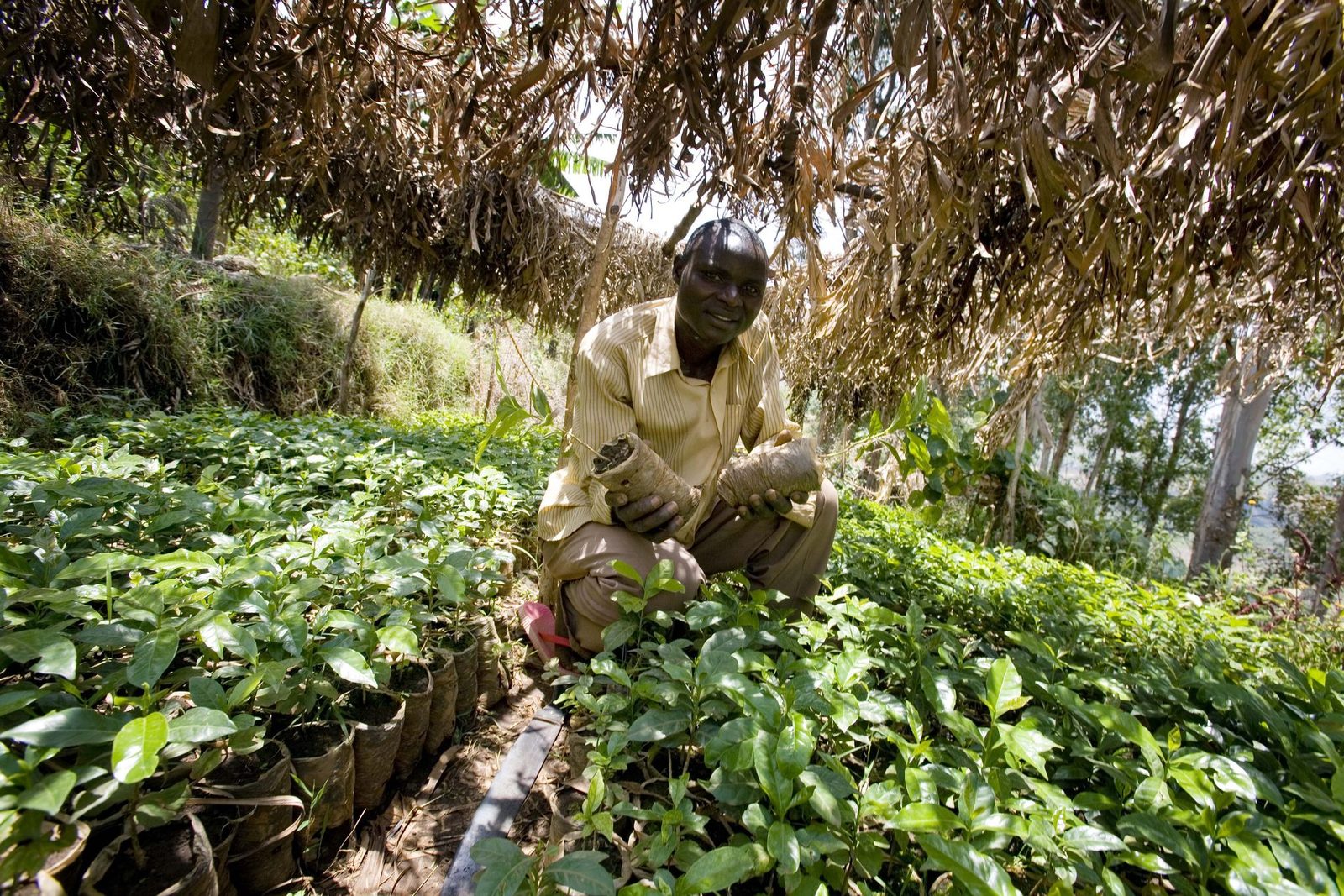
Man holding tree seedlings in a hillside nursery, Uganda

Assess · Restore · Consult

Assess · Restore · Consult

Environment and Community

We complete an environmental and social impact study before we build. We treat process water and control dust and tailings while we operate, and we restore the land and fund closure when we leave. Neighbouring communities are consulted before a gate opens, informed as we work, and able to raise a grievance and have it answered.

Congolese environmental law rests on assessment, prevention, the polluter-pays principle and the public's right to know. The Mining Code requires an environmental and social impact study and a management plan before exploitation or processing begins, with financial security for rehabilitation. We follow that sequence at every plant: study, plan, approval, financial security, then construction. In Tanzania and Angola we do the same under their environmental framework laws.

Our gravity circuits use water and produce tailings; our refinery uses reagents. We treat process water before discharge, contain tailings, control dust and noise, and store and neutralise reagents under written procedures. Closure is planned from the first day: a costed rehabilitation plan, a financial guarantee, and a restored site that can be farmed or safely left. We report monitoring results to the state services that ask for them.

No gate opens before the site and cooperative agreements are signed and the neighbouring community has been consulted in its own language. We explain what we will build, what it means for water, land and roads, and how to reach us. We seek the free, prior and informed consent of affected communities before land is taken or its use is changed. A grievance raised at any site office is logged, acknowledged, investigated and answered.

Our commitments

  • An environmental and social study and management plan before any plant is built.
  • Process water treated, tailings contained, dust and reagents controlled under written procedures.
  • A costed closure plan and financial security from the first day of operation.
  • Community consultation before a gate opens, in the community's language.
  • Free, prior and informed consent sought before land is taken or its use changed.
  • A logged, answered grievance mechanism open to any neighbour or worker.

Laws and standards we work to

DR Congo
Loi portant principes fondamentaux relatifs à la protection de l'environnement
Loi n° 11/009 du 9 juillet 2011
Environmental and social impact assessment, prevention, the polluter-pays principle and public access to environmental information.
DR Congo
Code minier, environmental obligations and rehabilitation
Loi n° 007/2002 du 11 juillet 2002, modifiée et complétée par la Loi n° 18/001 du 9 mars 2018, incl. art. 204; Règlement minier, Décret n° 18/024 du 8 juin 2018
An environmental and social impact study and management plan before exploitation, mitigation and rehabilitation measures, and financial security for site rehabilitation.
Tanzania
Environmental Management Act, 2004
Act No. 20 of 2004 (Cap. 191)
Environmental impact assessment and audit for projects, and the institutional framework for environmental management.
Angola
Lei de Bases do Ambiente
Lei n.º 5/98, de 19 de Junho
The framework for environmental protection, impact assessment and the sustainable use of natural resources in Angola.
International
UN Guiding Principles on Business and Human Rights, Guiding Principle 31
Endorsed by Human Rights Council resolution 17/4 (2011), Principle 31
Operational-level grievance mechanisms must be legitimate, accessible, predictable, equitable, transparent, rights-compatible, a source of learning and based on dialogue.
International
UN Declaration on the Rights of Indigenous Peoples
General Assembly resolution 61/295 (2007)
Free, prior and informed consent of indigenous peoples before projects affecting their lands and resources are approved.
Finance professional reviewing charts on a tablet beside calculator and reports

Know your counterparty · Traceable payment · Report

Know your counterparty · Traceable payment · Report

Anti-Money Laundering

We know who we buy from and who we sell to. Every supplier, cooperative, trader and customer is identified, its beneficial owners recorded and its source of funds understood before we deal. Producers are paid through recorded channels against a receipt, never in unrecorded cash, and we report suspicious transactions to the financial intelligence unit of the country concerned.

Gold and gemstones are a classic vehicle for laundering money, and minerals of unknown origin may be criminal property. We maintain a written, risk-based anti-money-laundering programme with a named compliance officer, staff training and independent review. It follows the form the US Bank Secrecy Act requires of dealers in precious metals and stones. We apply it in every country we operate in, whether or not local law reaches us.

Know-your-counterparty checks are done before the first transaction and refreshed on a schedule. They cover identity, licence or cooperative approval, beneficial ownership, politically exposed persons, sanctions status and source of funds, with enhanced checks where risk is higher. Minerals whose origin cannot be shown are refused. We do not accept cash above the thresholds in UK and DRC law, and we report large cash receipts where US law requires.

Purchase gates run on cash controls. Every payment is logged to a named miner or cooperative against a weighed, assayed delivery, and paid by mobile money or bank transfer wherever possible. Dual authorisation, daily reconciliation and counted floats apply at every gate. Suspicious transactions are reported to the financial intelligence unit of the country concerned: CENAREF, Tanzania's FIU, Angola's UIF, the UK National Crime Agency or FinCEN.

Our commitments

  • A written, risk-based AML programme with a named compliance officer and annual review.
  • Identity, licence, beneficial ownership and source of funds verified before we deal.
  • Enhanced due diligence for politically exposed persons and higher-risk counterparties.
  • Minerals of unknown origin are refused as potential criminal property.
  • Payments to producers by recorded channels, with dual authorisation and daily reconciliation.
  • Suspicious transactions reported to the competent financial intelligence unit.

Laws and standards we work to

United States
Bank Secrecy Act and rules for dealers in precious metals, stones or jewels
31 U.S.C. § 5311 et seq.; 31 C.F.R. part 1027; cash reporting at 31 U.S.C. § 5331 and 26 U.S.C. § 6050I
A written, risk-based anti-money-laundering programme with a compliance officer and training, and reporting of cash receipts over US$10,000.
United Kingdom
Proceeds of Crime Act 2002, Part 7
2002 c. 29, ss. 327 to 340
Dealing with criminal property is an offence; suspicions are reported to the National Crime Agency.
United Kingdom
Money Laundering, Terrorist Financing and Transfer of Funds (Information on the Payer) Regulations 2017
SI 2017/692
Customer and beneficial-owner verification, enhanced due diligence for politically exposed persons, and record-keeping, including for high-value cash dealers.
DR Congo
Loi relative à la lutte contre le blanchiment de capitaux et le financement du terrorisme
Loi n° 22/068 du 27 décembre 2022; CENAREF as financial intelligence unit
Dealers in precious metals and stones identify customers, keep records and report suspicious transactions to CENAREF.
Tanzania
Anti-Money Laundering Act, 2006
Act No. 12 of 2006 (Cap. 423)
Dealers in precious metals and stones verify customers, keep records and report suspicious transactions to the Financial Intelligence Unit.
Angola
Lei de Prevenção e Combate ao Branqueamento de Capitais, Financiamento do Terrorismo e Proliferação de Armas de Destruição em Massa
Lei n.º 5/20, de 27 de Janeiro, as amended by Lei n.º 11/24
Customer due diligence, record-keeping and suspicious transaction reporting to the Unidade de Informação Financeira.
International
OECD Due Diligence Guidance, Annex II
OECD Due Diligence Guidance for Responsible Supply Chains of Minerals from Conflict-Affected and High-Risk Areas, 3rd ed. (2016), Annex II
No support for money laundering through the mineral trade; payment of all taxes, fees and royalties.
Neatly patched network cables in a server rack

Minimum data · Clear purpose · Your rights

Minimum data · Clear purpose · Your rights

Data Protection and Privacy

We hold personal data about our workers, the producers we buy from, our business contacts and the people who visit our sites and our website. We collect only what a purchase, a payroll, a security check or a legal duty needs, and we say why and protect it. We give people the rights their law provides: access, correction, deletion.

What we hold. For workers: identity, contract, pay, bank or mobile-money details, training, safety and disciplinary records. For producers and suppliers: name, miner card or cooperative number, identity document, payment details, delivery history and the due-diligence checks the law requires. For site visitors: identity, entry and exit, and CCTV where a site is monitored. For website visitors and enquirers: contact details and the message sent. We do not sell personal data and we do not use it for automated decisions.

Why, and on what basis. Contract and payroll; legal duties such as due diligence, sanctions screening and tax; the security of people and material; and our legitimate interest in running the business. Data is kept only as long as the purpose or the law requires, then deleted. Access is limited to people who need it, records are encrypted or locked, and we protect miner records in the DRC to the standard UK GDPR sets.

Your rights. Anyone may ask what we hold about them, correct it, object to some uses, and ask for deletion where the law allows, by writing to contact@gmpginternational.com. We answer within the time the applicable law sets. We register or notify our processing where a host-state law requires it, and we move personal data across borders only with a lawful basis and safeguards. Complaints may also go to the supervisory authority of the country concerned.

Our commitments

  • We collect only the data a purchase, payroll, security check or legal duty needs.
  • We tell people what we hold and why, in a language they read.
  • We do not sell personal data or make automated decisions about people.
  • Cross-border transfers only with a lawful basis and safeguards.
  • Access, correction, objection and deletion requests answered within legal time limits.
  • Personal data deleted when its purpose and legal retention period end.

Laws and standards we work to

United Kingdom
UK GDPR and Data Protection Act 2018
UK GDPR (Regulation (EU) 2016/679 as it forms part of UK law under section 3 of the European Union (Withdrawal) Act 2018); Data Protection Act 2018, 2018 c. 12
Lawful, fair, transparent and minimal processing, security, transfer safeguards and data-subject rights, overseen by the Information Commissioner's Office.
EU
General Data Protection Regulation
Regulation (EU) 2016/679
Applies to the data of people in the EU and to any EU establishment; lawful basis, transparency, rights and transfer rules.
DR Congo
Code du numérique
Ordonnance-loi n° 23/010 du 13 mars 2023
Lawful basis, purpose limitation, security and data-subject rights for personal data processed in the DRC; controls on export of Congolese personal data.
Tanzania
Personal Data Protection Act, 2022
Act No. 11 of 2022, in force 1 May 2023
Controllers register with the Personal Data Protection Commission, process lawfully and restrict cross-border transfers.
Angola
Lei da Protecção de Dados Pessoais
Lei n.º 22/11, de 17 de Junho
Processing needs consent or another legal basis; sensitive data is restricted; controllers notify or seek authorisation from the Agência de Protecção de Dados.
African and international professionals shake hands across a meeting table with documents

Report · Protected · Answered

Report · Protected · Answered

Speak Up

Anyone, whether employee, contractor, miner, grower, neighbour or business partner, may report a concern about our conduct to contact@gmpginternational.com, at any site office, or anonymously. We investigate every report, we answer, and we prohibit retaliation of any kind against anyone who raises a concern in good faith. No contract we sign stops a report to a regulator.

A compliance programme is only as good as the reports that reach it. Concerns about bribery, forced or child labour, security conduct, safety, environmental harm, fraud, discrimination, harassment, data misuse or any other breach of law or of these commitments can be raised. Reports are taken in French, Swahili, Lingala, Portuguese or English, by email, in writing, in person at a site office or through a site clerk, with or without a name.

Every report is logged, acknowledged, assessed and, where warranted, investigated by people independent of the matter. The outcome is reported back to the person who raised it where we can reach them. Serious matters are reported to the board and, where the law requires, to the competent authority. Grievances from communities follow the same process, and a remedy is offered where we have caused or contributed to harm.

We prohibit retaliation, threats, dismissal, demotion, loss of purchasing access or any other detriment against a person for raising a concern in good faith or cooperating with an investigation. We treat retaliation as misconduct. We never use confidentiality or contract terms to prevent a report to a regulator, a law-enforcement agency or a court. We protect reporters to the standard of the UK Public Interest Disclosure Act, US whistleblower law and the EU Whistleblowing Directive.

Our commitments

  • Open to everyone: contact@gmpginternational.com, any site office, or an anonymous report.
  • Reports accepted in French, Swahili, Lingala, Portuguese and English.
  • Every report logged, acknowledged and answered; serious matters reach the board.
  • No retaliation against anyone who reports in good faith; retaliation is misconduct.
  • No contract or confidentiality term prevents a report to a regulator or court.
  • Remedy offered where we have caused or contributed to harm.

Laws and standards we work to

United Kingdom
Public Interest Disclosure Act 1998 and Employment Rights Act 1996, Part IVA
1998 c. 23; 1996 c. 18, Part IVA
Workers who make a protected disclosure are protected from dismissal and detriment.
United States
Dodd-Frank Act, section 922, and Sarbanes-Oxley Act, section 806
15 U.S.C. § 78u-6; 17 C.F.R. § 240.21F-17; 18 U.S.C. § 1514A
No retaliation against people who report securities-law violations, and no contract or confidentiality term that impedes a report to the SEC.
United States
FAR 52.222-50, Combating Trafficking in Persons
48 C.F.R. § 52.222-50
Contractors inform employees of reporting channels and may not retaliate against those who report trafficking or forced labour.
EU
Whistleblower Protection Directive
Directive (EU) 2019/1937
Internal and external reporting channels, confidentiality, and protection from retaliation for people reporting breaches of Union law.
International
UN Guiding Principles on Business and Human Rights, Guiding Principle 31
Endorsed by Human Rights Council resolution 17/4 (2011), Principle 31
Grievance mechanisms are legitimate, accessible, predictable, equitable, transparent, rights-compatible and based on engagement and dialogue.

Traceability

We trace every value chain from point of provenance to final customer, with a recorded custody transfer at every hand-over. Every consignment carries a record of who produced it, who handled it and where it went, and those records are kept for audit.

Labour

GMPG neither uses nor tolerates slave labour, forced or compulsory labour, indentured or bonded labour, debt bondage, prison labour or human trafficking anywhere in its operations or supply chain. Workers keep their identity documents, are never charged recruitment fees, and may leave employment freely. No one under 18 works underground or in hazardous work.

Speak up

Raise a concern

If you have seen something in our operations or supply chain that breaks the law or these commitments, tell us. Write to the address below, speak to any site office, or report without giving your name. We log every report, we investigate, we answer, and we do not tolerate retaliation against anyone who speaks up in good faith.

Email contact@gmpginternational.com
Smiling worker on a clean factory floor